
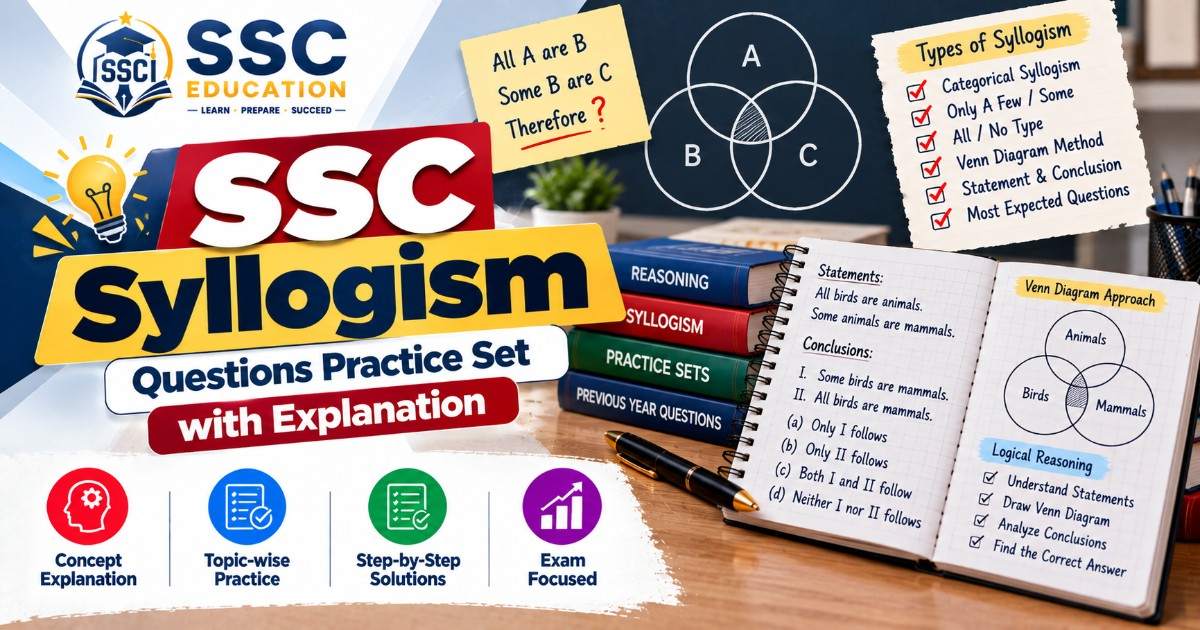
SSC Syllogism Questions Practice Set with Explanation
Rahul Kumar
SSC Exam Expert & Content Editor
Table of Contents
Thirty syllogism questions with clear explanations and a simple rules table. Every answer has been checked against all possible Venn diagrams.
Syllogism is a topic that many students find confusing, mainly because the statements sometimes sound wrong in real life. The secret is to forget real life completely. Treat every statement as true, and check only whether each conclusion is definitely true from those statements. If it is only possible or probable, it does not follow.
This set has 30 syllogism questions with two or three statements and two conclusions each. Every question has four options and a short explanation that describes what the Venn diagram would look like. We have checked each answer against all possible diagrams, so you can trust the key.
How to use it: Draw a small Venn diagram for every question. It feels slow at first, but after about 15 questions you will start seeing the diagram in your head.
The Rules in One Table
| Statements | What you can conclude |
|---|---|
| All A are B + All B are C | All A are C |
| Some A are B + All B are C | Some A are C |
| All A are B + Some B are C | No sure conclusion between A and C |
| Some A are B + Some B are C | No sure conclusion |
| All A are B + No B is C | No A is C |
| Some A are B + No B is C | Some A are not C |
| No A is B + All C are A | No C is B |
Five Things to Remember
- "Some A are B" and "Some B are A" mean the same thing. You can reverse a "some" statement.
- "No A is B" and "No B is A" also mean the same. You can reverse a "no" statement.
- "All A are B" cannot be reversed. It does not tell you that all B are A.
- Two "some" statements together give no sure conclusion.
- Do not use your own knowledge. Even if "all pens are books" sounds strange, accept it.
Practice Questions (Q1–Q30)
Choose the correct option in each question.
Q1. Statements: All A are B. All B are C.
Conclusions: I. All A are C. II. All C are A.
(a) Only conclusion I follows (b) Only conclusion II follows (c) Both conclusions I and II follow (d) Neither conclusion I nor II follows
Answer: (a) Only conclusion I follows
Explanation: A lies inside B and B lies inside C, so A lies inside C. Conclusion I follows. Conclusion II does not, because C can be bigger than A.
Q2. Statements: All A are B. Some B are C.
Conclusions: I. Some A are C. II. Some C are B.
(a) Only conclusion I follows (b) Only conclusion II follows (c) Both conclusions I and II follow (d) Neither conclusion I nor II follows
Answer: (b) Only conclusion II follows
Explanation: Conclusion I does not follow, because the B's that are C may not be A's. Conclusion II is just "Some B are C" turned around, so it follows.
Q3. Statements: Some A are B. All B are C.
Conclusions: I. Some A are C. II. All A are C.
(a) Only conclusion I follows (b) Only conclusion II follows (c) Both conclusions I and II follow (d) Neither conclusion I nor II follows
Answer: (a) Only conclusion I follows
Explanation: The A's that are B are all inside C, so some A are C. Conclusion I follows. Only some A are B, so we cannot say all A are C.
Q4. Statements: Some A are B. Some B are C.
Conclusions: I. Some A are C. II. Some C are A.
(a) Only conclusion I follows (b) Only conclusion II follows (c) Both conclusions I and II follow (d) Neither conclusion I nor II follows
Answer: (d) Neither conclusion I nor II follows
Explanation: The A's that are B and the B's that are C may be different parts of B, so A and C need not overlap. Neither conclusion follows.
Q5. Statements: All A are B. All C are B.
Conclusions: I. All A are C. II. Some A are C.
(a) Only conclusion I follows (b) Only conclusion II follows (c) Both conclusions I and II follow (d) Neither conclusion I nor II follows
Answer: (d) Neither conclusion I nor II follows
Explanation: A and C are both inside B, but they can be two separate parts of it. Neither conclusion is certain.
Q6. Statements: Some A are B. No B is C.
Conclusions: I. Some A are not C. II. No A is C.
(a) Only conclusion I follows (b) Only conclusion II follows (c) Both conclusions I and II follow (d) Neither conclusion I nor II follows
Answer: (a) Only conclusion I follows
Explanation: Some A are B, and no B is C, so those A cannot be C. Conclusion I follows. Other A may be C, so II is not certain.
Q7. Statements: All A are B. Some A are C.
Conclusions: I. Some B are C. II. All C are B.
(a) Only conclusion I follows (b) Only conclusion II follows (c) Both conclusions I and II follow (d) Neither conclusion I nor II follows
Answer: (a) Only conclusion I follows
Explanation: Some A are C, and all A are B, so those A are both B and C. Conclusion I follows. C can be bigger than B, so II does not follow.
Q8. Statements: Some A are B. All B are C.
Conclusions: I. Some A are C. II. All A are B.
(a) Only conclusion I follows (b) Only conclusion II follows (c) Both conclusions I and II follow (d) Neither conclusion I nor II follows
Answer: (a) Only conclusion I follows
Explanation: The A's that are B lie inside C, so some A are C. Conclusion I follows. "All A are B" is not given, only "Some A are B".
Q9. Statements: All A are B. Some B are C.
Conclusions: I. All C are A. II. No C is A.
(a) Only conclusion I follows (b) Only conclusion II follows (c) Both conclusions I and II follow (d) Neither conclusion I nor II follows
Answer: (d) Neither conclusion I nor II follows
Explanation: Some B are C, and those B's may or may not be A. So neither "All C are A" nor "No C is A" is certain.
Q10. Statements: Some A are B. Some B are C. All C are D.
Conclusions: I. Some B are D. II. Some A are D.
(a) Only conclusion I follows (b) Only conclusion II follows (c) Both conclusions I and II follow (d) Neither conclusion I nor II follows
Answer: (a) Only conclusion I follows
Explanation: Some B are C and all C are D, so some B are D. Conclusion I follows. The A's that are B may be different from the B's that are C, so II is not certain.
Q11. Statements: All A are B. All B are C. All C are D.
Conclusions: I. All A are D. II. All D are A.
(a) Only conclusion I follows (b) Only conclusion II follows (c) Both conclusions I and II follow (d) Neither conclusion I nor II follows
Answer: (a) Only conclusion I follows
Explanation: A is inside B, B is inside C, and C is inside D, so all A are D. Conclusion I follows. The reverse (all D are A) is not certain.
Q12. Statements: No A is B. Some B are C.
Conclusions: I. Some C are not A. II. Some C are A.
(a) Only conclusion I follows (b) Only conclusion II follows (c) Both conclusions I and II follow (d) Neither conclusion I nor II follows
Answer: (a) Only conclusion I follows
Explanation: Some B are C, and no B is A, so those C are not A. Conclusion I follows. Nothing tells us that any C is A, so II does not follow.
Q13. Statements: All A are B. No C is B.
Conclusions: I. No C is A. II. No A is C.
(a) Only conclusion I follows (b) Only conclusion II follows (c) Both conclusions I and II follow (d) Neither conclusion I nor II follows
Answer: (c) Both conclusions I and II follow
Explanation: No C is B, and A is inside B, so no C is A. Conclusion I follows. "No A is C" is the same statement in the other direction, so II also follows.
Q14. Statements: Some A are B. All B are C. No C is D.
Conclusions: I. Some A are not D. II. Some C are not D.
(a) Only conclusion I follows (b) Only conclusion II follows (c) Both conclusions I and II follow (d) Neither conclusion I nor II follows
Answer: (c) Both conclusions I and II follow
Explanation: The A's that are B lie inside C, and no C is D. So those A are not D, and some C are not D as well. Both conclusions follow.
Q15. Statements: All A are B. Some C are not B.
Conclusions: I. Some C are not A. II. All C are A.
(a) Only conclusion I follows (b) Only conclusion II follows (c) Both conclusions I and II follow (d) Neither conclusion I nor II follows
Answer: (a) Only conclusion I follows
Explanation: Some C are not B, and all A are B, so those C are not A either. Conclusion I follows. All C being A is not possible from the given facts.
Q16. Statements: Some A are B. Some A are C.
Conclusions: I. Some B are C. II. Some C are B.
(a) Only conclusion I follows (b) Only conclusion II follows (c) Both conclusions I and II follow (d) Neither conclusion I nor II follows
Answer: (d) Neither conclusion I nor II follows
Explanation: The A's that are B and the A's that are C could be different A's, so B and C need not overlap. Neither conclusion follows.
Q17. Statements: All A are B. Some C are A.
Conclusions: I. Some C are B. II. All C are B.
(a) Only conclusion I follows (b) Only conclusion II follows (c) Both conclusions I and II follow (d) Neither conclusion I nor II follows
Answer: (a) Only conclusion I follows
Explanation: The C's that are A are also B (since all A are B). So some C are B and I follows. All C being B is not certain, so II does not follow.
Q18. Statements: No A is B. All C are A.
Conclusions: I. No C is B. II. Some C are B.
(a) Only conclusion I follows (b) Only conclusion II follows (c) Both conclusions I and II follow (d) Neither conclusion I nor II follows
Answer: (a) Only conclusion I follows
Explanation: All C are inside A, and no A is B, so no C is B. Conclusion I follows. Conclusion II says the opposite, so it cannot follow.
Q19. Statements: Some A are B. No A is C.
Conclusions: I. Some B are not C. II. No B is C.
(a) Only conclusion I follows (b) Only conclusion II follows (c) Both conclusions I and II follow (d) Neither conclusion I nor II follows
Answer: (a) Only conclusion I follows
Explanation: Some A are B and no A is C, so those B are not C. Conclusion I follows. We cannot say that no B is C, since other B may be C.
Q20. Statements: Some A are B. All A are C.
Conclusions: I. Some C are B. II. Some B are C.
(a) Only conclusion I follows (b) Only conclusion II follows (c) Both conclusions I and II follow (d) Neither conclusion I nor II follows
Answer: (c) Both conclusions I and II follow
Explanation: The A's that are B lie inside C, so some C are B. Conclusion I follows. "Some B are C" is the same statement turned around, so II also follows.
Q21. Statements: All A are B. No B is C.
Conclusions: I. No A is C. II. No C is A.
(a) Only conclusion I follows (b) Only conclusion II follows (c) Both conclusions I and II follow (d) Neither conclusion I nor II follows
Answer: (c) Both conclusions I and II follow
Explanation: A is inside B and no B is C, so no A is C. Conclusion I follows. "No C is A" is the same fact, so II also follows.
Q22. Statements: No A is B. Some A are C.
Conclusions: I. Some C are not B. II. Some C are B.
(a) Only conclusion I follows (b) Only conclusion II follows (c) Both conclusions I and II follow (d) Neither conclusion I nor II follows
Answer: (a) Only conclusion I follows
Explanation: Some A are C, and no A is B, so those C are not B. Conclusion I follows. Conclusion II says some C are B, which is not certain.
Q23. Statements: All A are B. All B are C. Some C are D.
Conclusions: I. Some A are D. II. Some D are C.
(a) Only conclusion I follows (b) Only conclusion II follows (c) Both conclusions I and II follow (d) Neither conclusion I nor II follows
Answer: (b) Only conclusion II follows
Explanation: "Some C are D" can be turned around to "Some D are C", so II follows. Nothing connects A with D directly, so I does not follow.
Q24. Statements: Some A are B. No B is C.
Conclusions: I. Some A are not C. II. Some A are C.
(a) Only conclusion I follows (b) Only conclusion II follows (c) Both conclusions I and II follow (d) Neither conclusion I nor II follows
Answer: (a) Only conclusion I follows
Explanation: Some A are B and no B is C, so those A are not C. Conclusion I follows. Some A being C is not certain.
Q25. Statements: All A are B. All C are B.
Conclusions: I. Some A are C. II. Some C are A.
(a) Only conclusion I follows (b) Only conclusion II follows (c) Both conclusions I and II follow (d) Neither conclusion I nor II follows
Answer: (d) Neither conclusion I nor II follows
Explanation: A and C are both inside B, but they can be two separate parts. Neither "Some A are C" nor "Some C are A" is certain.
Q26. Statements: No A is B. All C are A. All D are B.
Conclusions: I. No C is D. II. No D is C.
(a) Only conclusion I follows (b) Only conclusion II follows (c) Both conclusions I and II follow (d) Neither conclusion I nor II follows
Answer: (c) Both conclusions I and II follow
Explanation: C is inside A and D is inside B, and no A is B, so no C is D. Conclusion I follows, and II is the same statement turned around.
Q27. Statements: No A is B. No B is C.
Conclusions: I. Some A are not C. II. No A is C.
(a) Only conclusion I follows (b) Only conclusion II follows (c) Both conclusions I and II follow (d) Neither conclusion I nor II follows
Answer: (d) Neither conclusion I nor II follows
Explanation: A and C are both separate from B, but nothing tells us how A and C relate to each other. Neither conclusion is certain.
Q28. Statements: Some A are B. All B are C.
Conclusions: I. Some C are A. II. Some A are C.
(a) Only conclusion I follows (b) Only conclusion II follows (c) Both conclusions I and II follow (d) Neither conclusion I nor II follows
Answer: (c) Both conclusions I and II follow
Explanation: The A's that are B lie inside C, so some C are A (I follows), and "Some A are C" is the same fact, so II follows as well.
Q29. Statements: All A are B. Some A are C.
Conclusions: I. Some C are B. II. Some B are C.
(a) Only conclusion I follows (b) Only conclusion II follows (c) Both conclusions I and II follow (d) Neither conclusion I nor II follows
Answer: (c) Both conclusions I and II follow
Explanation: The A's that are C are inside B, so some C are B (I follows), and "Some B are C" is the same fact, so II also follows.
Q30. Statements: All A are B. No B is C.
Conclusions: I. No A is C. II. Some C are A.
(a) Only conclusion I follows (b) Only conclusion II follows (c) Both conclusions I and II follow (d) Neither conclusion I nor II follows
Answer: (a) Only conclusion I follows
Explanation: A is inside B and no B is C, so no A is C. Conclusion I follows. Some C being A is impossible here, so II does not follow.
How to Improve Your Syllogism Score
Most mistakes in syllogism come from two habits: accepting a conclusion because it "sounds right", and forgetting that "some" can be reversed but "all" cannot. When you check your answers, look at each wrong question and ask yourself which of these two habits caused the mistake.
A good target is to solve each question in about 40 seconds. Try the 30 questions again after a week and see how many you can do without drawing the diagram. Once this feels comfortable, you can move on to the more mixed statement-and-conclusion questions from previous year papers.
Rahul Kumar
SSC Exam Expert & Content Editor
Rahul is a senior SSC exam strategist with 8+ years of experience helping aspirants crack CGL, CHSL and MTS exams. He writes in-depth notification breakdowns, exam pattern guides and preparation strategies.